


Our current stock allocation is in an Over Weight position. This allocation of stocks vs. bonds is driven by technical market signals. These signals may lead to a shift in stock weightings in SFMG portfolios’ target allocations. This is not a specific allocation recommendation; actual allocations may vary by client.

- The Federal Reserve raised interest rates this month and indicated further increases may follow. The benchmark rate rose by 0.25% to a range of 3.75%–4.00%, marking the first hike since 2023. Officials also revised their rate outlook higher, with the median year end projection climbing to 4.1% from 3.8% in June. In addition, the Fed upgraded its 2026 GDP growth forecast and lowered its unemployment projection.
- A September business survey signaled stronger growth and persistent inflation pressures. The preliminary S&P Global U.S. Composite PMI rose to 58.4 from 56.0 in August, beating expectations and marking its strongest reading since 2021, with businesses reporting the fastest hiring in over four years alongside the sharpest input cost increases in four years. The combination of firm growth and sticky price pressures is pushing Treasury yields higher and reinforcing expectations that the Fed may need to hold rates elevated or tighten further.
- The eurozone economy grew faster than initially estimated in the second quarter, expanding 0.6% (2.6% annualized, the fastest pace since Q2 2022) on strong exports and consumer spending, even as the U.S.-Iran conflict pushed energy prices higher. That outpaced the U.S.’s 1.5% growth and made the eurozone the only major economy to accelerate in the period. The U.S., China, Japan, and India all slowed from the first quarter. Consumer spending could get pressured in upcoming quarters though, as rising energy costs weigh on households with colder weather setting in.

- Rising interest rates are not just a U.S. phenomenon. Government bond yields in the U.K., Japan, Germany, and France have all been climbing alongside U.S. Treasuries this year. Japan’s move is especially notable, as its 10-year yield has crossed 3% and reached its highest level in 30 years, a significant shift from the ultra-low rate environment that defined its bond market for decades. These countries are facing many of the same pressures we see here: persistent inflation, rising government deficits, higher oil prices, and a growing amount of debt that needs to be issued.
- Diesel prices have surged to record highs, up 87% and now 12% above the 2022 peak as of 9/22/26, far outpacing gasoline’s year to date rise. This consistent climb has been fueled by supply disruptions abroad, most notably shipping constraints in the Strait of Hormuz and attacks on Russian production facilities. Unlike gasoline, which hits consumers as a one time tax on discretionary spending, diesel is embedded in the cost of nearly every physical good, from freight to construction, so its rise migrates with a lag into core goods and services rather than staying contained to just ‘energy’ within the inflation data.
- Technology stocks did almost all of the heavy lifting for the market in September. The technology sector (ticker: XLK) was up roughly 7% through September 25, while virtually every other sector posted negative performance as interest rates continued to move higher. Communication Services (ticker: XLC) was the only other sector in positive territory at up 2.21%, and that gain was largely driven by technology-oriented names like Meta that happen to be classified within Communication Services. So while the S&P 500 and Nasdaq are still sitting near all-time highs, the underlying support from a sector standpoint remains thin, which leaves the indexes vulnerable if AI enthusiasm slows again.

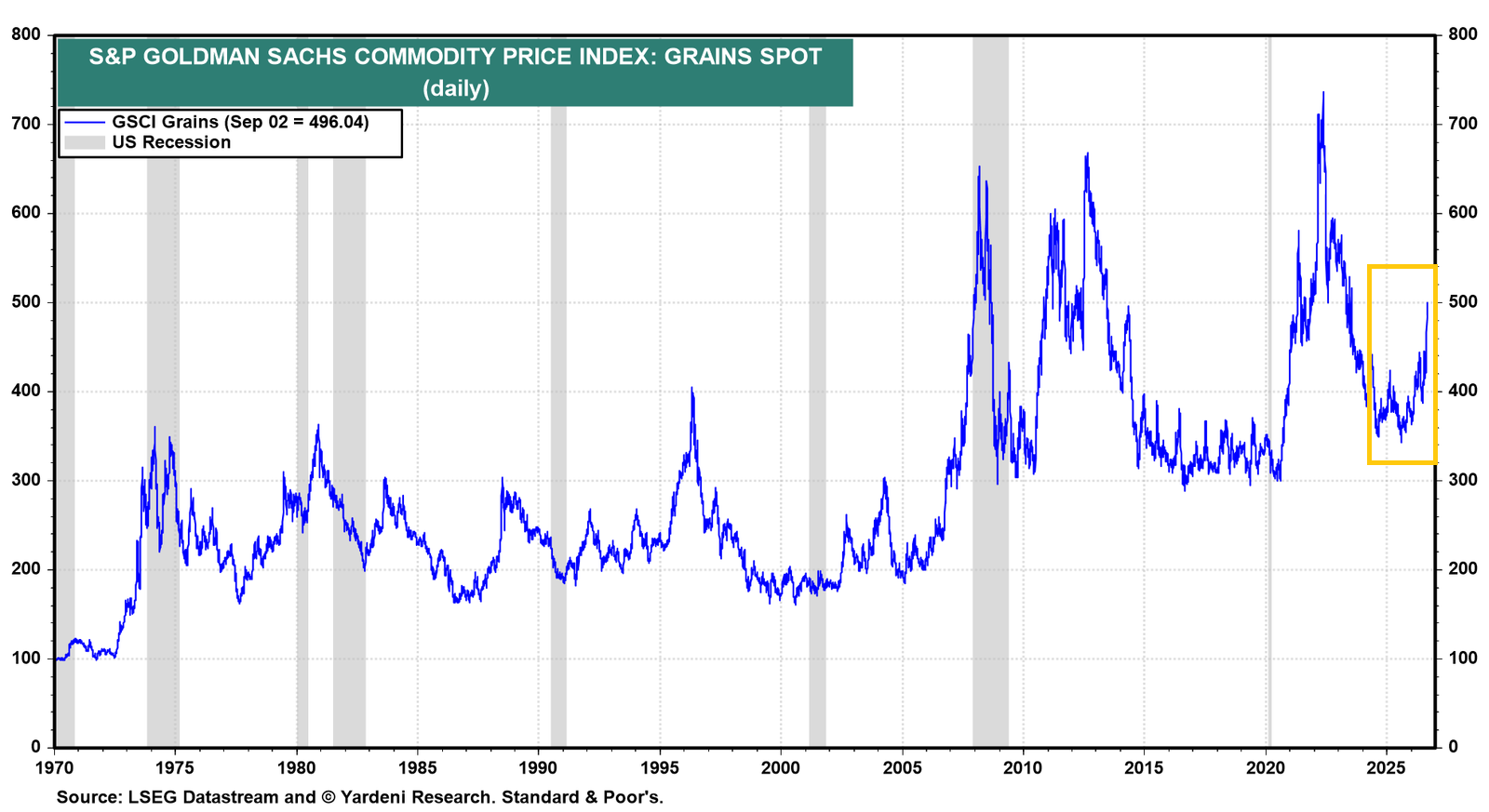
Food inflation is becoming a more meaningful source of price pressure. Grain prices are surging (chart above), with wheat and corn recently reaching their highest levels in more than three years on Black Sea supply disruptions, El Niño weather damage, and higher fuel and fertilizer costs. The war between Russia and Ukraine is a major driver, as the two countries supply roughly 30 percent of global wheat exports, and recent attacks on port infrastructure in both countries have disrupted shipments right at the peak of harvest season. Because these commodities are a critical input in the food supply chain, the impact is likely to filter through to consumer food prices with a lag.

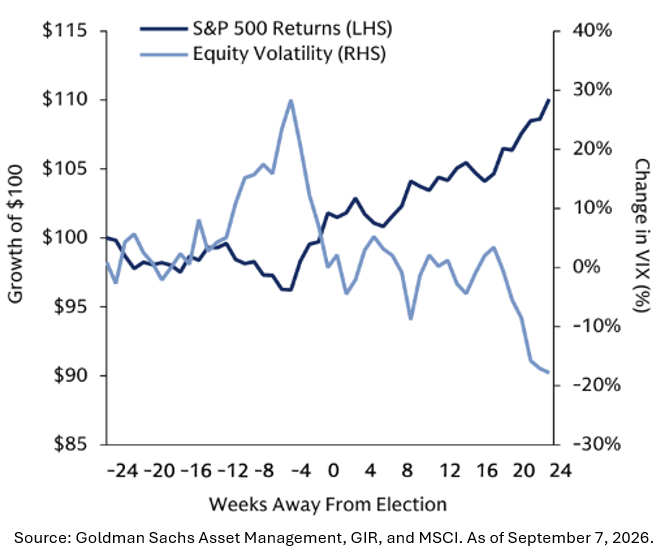
Midterm election years have historically been more volatile and have delivered weaker returns than other years. The usual explanation is that these years carry added policy uncertainty around taxes, spending, and regulation, and investors tend to dislike unresolved questions. The chart above shows that volatility typically rises in the weeks leading up to the election and then fades once the outcome is known, with markets often finding strength afterward. This year has followed a very different path. The S&P 500 has gained over 12% year to date, while the average midterm year has historically been flat at this point and the average non-midterm year has been up close to 9%. Given the strength already in place and relatively low volatility so far, the traditional midterm playbook may not be how the fourth quarter unfolds.

Even as rates have shifted sharply higher globally, it has been impressive to see most major indices remain near all-time highs. Admittedly, much of that resilience has again come from a handful of large tech names holding up concentrated indices like the Nasdaq and S&P 500, but strong corporate earnings in the U.S. and abroad have also played a real role. That is a solid backdrop, and economic data has stayed relatively strong. Historically, higher interest rates alone have not necessarily translated into negative equity returns when paired with that kind of environment. So far, the pain has been concentrated in the sectors most sensitive to interest rates, including real estate, utilities, and small caps, where companies tend to carry more floating rate debt and feel higher borrowing costs more acutely than larger firms. But if inflation, energy prices, and interest rates keep climbing, concerns will eventually build about whether the economy can stay as steady as it has been. Volatility has stayed tame, but investors are still working through a list of uncertainties. These include how much further the Fed will continue tightening, the duration of the ongoing conflicts, the ceiling for oil prices and bond yields, and the outcome of the midterm elections. Investors are also watching whether growing concerns about AI safety slow the pace of development and cool the capital spending boom that has been fueling earnings growth. A resolution to both major conflicts would likely offer the greatest relief, easing much of the pressure around inflation and rising rates. Absent that, markets may continue to struggle to find their next leg higher.
The purpose of the update is to share some of our current views and research. Although we make every effort to be accurate in our content, the data is derived from other sources. While we believe these sources to be reliable, we cannot guarantee their validity. Charts and tables shown above are for informational purposes, and are not recommendations for investment in any specific security. Forward-looking statements are based on current expectations and assumptions and are subject to risks and uncertainties that may cause actual results to differ materially.