


Our current stock allocation is in an Over Weight position. This allocation of stocks vs. bonds is driven by technical market signals. These signals may lead to a shift in stock weightings in SFMG portfolios’ target allocations. This is not a specific allocation recommendation; actual allocations may vary by client.

- Trade wars are coming back into focus. The U.S. and Canada appear headed for a drawn-out trade standoff, with both governments and businesses preparing for a dispute that could stretch past the midterm elections. Talks broke down over the weekend, and the U.S. responded by placing 50% tariffs on $20 billion of Canadian goods. Canada has announced matching tariffs on a range of U.S. products, taking effect September 8.
- The ISM (Institute for Supply Management) surveys, which measure U.S. business activity, came in mixed but generally healthy. The Services reading, which tracks industries like finance, healthcare, and retail, came in at 54.1, just below expectations but comfortably above the 50 threshold that separates expansion from contraction. New Orders, a forward-looking component, rose encouragingly to 57.2 from 55.9.The one cautionary note was the Prices index, which jumped to 70.3 from 65.0, suggesting inflation pressures may be broader than just energy costs, something the Fed will likely factor into its next interest rate decision.
- July’s jobs report was more complicated than the headline numbers suggest. The economy lost 23,000 jobs last month, continuing a gradual slowdown in hiring. While the unemployment rate actually dipped slightly from 4.2% to 4.1%, that improvement is somewhat misleading. The reason it fell is that fewer working-age Americans are actively looking for work, and those who stop searching are no longer counted as unemployed. This “Labor Force Participation Rate” decline is a warning sign, suggesting the job market may be softer than the headline unemployment figure implies.

- European stocks have continued to struggle despite one of the region’s strongest earnings seasons in years, as ongoing energy supply disruptions keep inflation concerns elevated. That combination, solid earnings paired with depressed valuations, reinforces the rationale for maintaining exposure to the region. Should the conflicts weighing on Europe move toward resolution, we believe European equities could be positioned for a meaningful recovery.
- Utility companies, measured by the State Street Utilities Select Sector SPDR ETF (ticker: XLU), have been one of the weakest performing sectors over the past month, and are down roughly 9.5% from its peak on 2/27/26. The sector has struggled as bond yields have climbed to multi-decade highs, making utilities’ dividends less attractive compared to the safer income now available in Treasury bonds. Adding to the pressure, political pushback against AI data centers, which had been expected to drive significant new electricity demand, has dimmed the growth outlook for the sector.
- The software industry has recovered meaningfully after a difficult stretch earlier this year. Fears that AI would make traditional software companies obsolete, a narrative dubbed the “SaaS Apocalypse,” drove the iShares Expanded Tech-Software ETF (ticker: IGV) down more than 35% between September 2025 and April 2026. August earnings reports have put some of those fears to rest, with companies demonstrating that AI is contributing to revenue growth rather than displacing existing business, and IGV has since recovered more than 40% from its April lows.

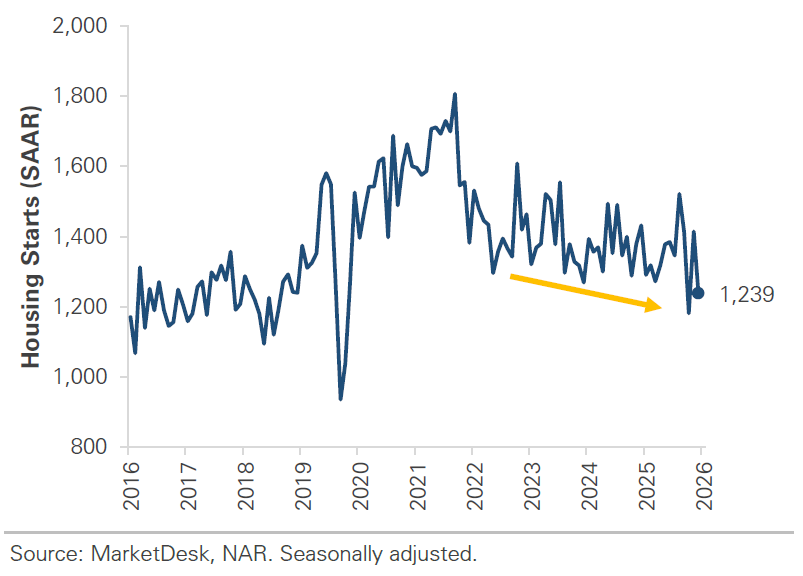
Housing construction slowed sharply in July, falling 12.4% to an annual rate of 1.239 million units, below expectations and down in three of the past four months. Both single-family and multifamily building activity declined across all four regions of the country, with single-family construction hitting its lowest level since November 2022. The culprits remain familiar: elevated mortgage rates and rising costs for materials, land, and labor, all of which have dampened builder confidence as well.

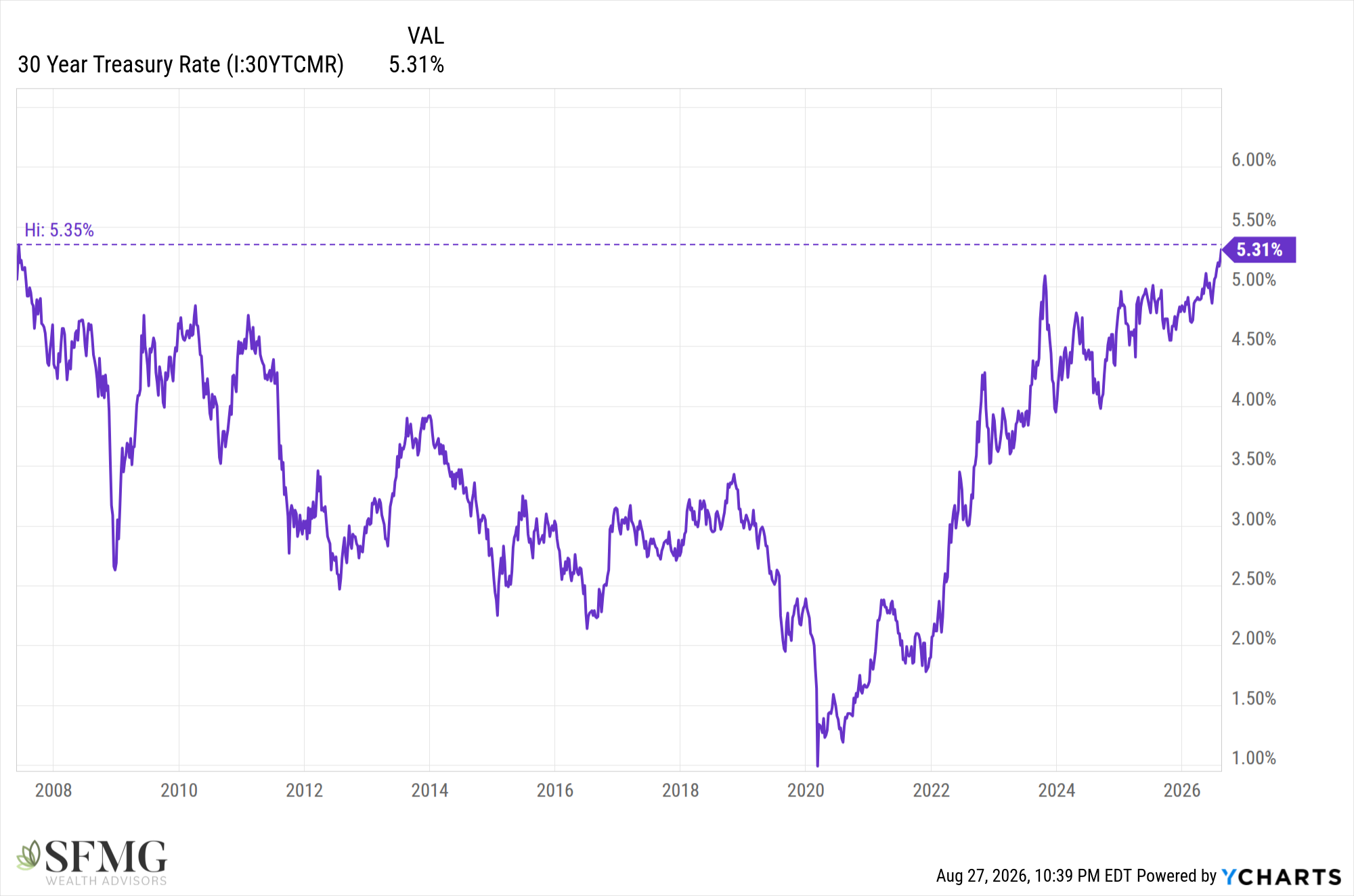
Long-term Treasury yields are behaving unusually, and it is worth watching closely. The 30-year Treasury yield climbed above 5.30% in August, its highest level since 2007, even as signs of economic softening have emerged. Normally, slowing growth would drive investors toward the safety of Treasury bonds, pushing yields lower. However, persistent inflation concerns and heavy government borrowing are keeping upward pressure on long-term rates, overriding that typical pattern. If this continues, longer-term Treasury bonds may not provide the same cushion they have historically offered during periods of slower growth, which has meaningful implications for how portfolios are positioned.

August has been shaped by three interconnected themes: growing concerns about U.S. government finances, the ongoing conflict with Iran, and a reignited trade dispute with Canada, all of which have pushed long-term interest rates to levels not seen in nearly two decades. The national debt crossed $40 trillion for the first time this month. Heavy government borrowing requires issuing large volumes of bonds, and too much supply pushes interest rates higher, raising the cost of mortgages and business loans across the economy. The Treasury Department responded by expanding its bond buyback program, purchasing older government bonds to reduce supply and ease long-term rates. Markets were briefly encouraged but gave back most of the gains the following day, remaining skeptical the program would be large enough to make a lasting difference. The war with Iran, which began in late February, remains a significant inflation driver. The Fed’s preferred inflation measure rose to 3.7% in July, up from 2.9% when the conflict started. This month the U.S. shifted from military to economic pressure, targeting Iran’s oil smuggling networks and foreign exchange channels. The U.S. military has established a shipping corridor through the Strait of Hormuz moving roughly 10 million barrels per day, about half of pre-war volumes, helping stabilize but not normalize energy prices. Late in the month, trade tensions with Canada escalated sharply. The U.S. imposed 50% tariffs on a broad range of Canadian products effective August 22, and Canada responded with matching tariffs set to take effect September 8. With Canada supplying meaningful volumes of oil, natural gas, electricity, and aluminum to the U.S., both sides hold real leverage, and a resolution does not appear imminent. Corporate earnings have remained a genuine bright spot this quarter, but the combination of persistent inflation, elevated borrowing costs, and renewed trade uncertainty makes for a complicated backdrop heading into fall.
The purpose of the update is to share some of our current views and research. Although we make every effort to be accurate in our content, the data is derived from other sources. While we believe these sources to be reliable, we cannot guarantee their validity. Charts and tables shown above are for informational purposes, and are not recommendations for investment in any specific security. Forward-looking statements are based on current expectations and assumptions and are subject to risks and uncertainties that may cause actual results to differ materially.